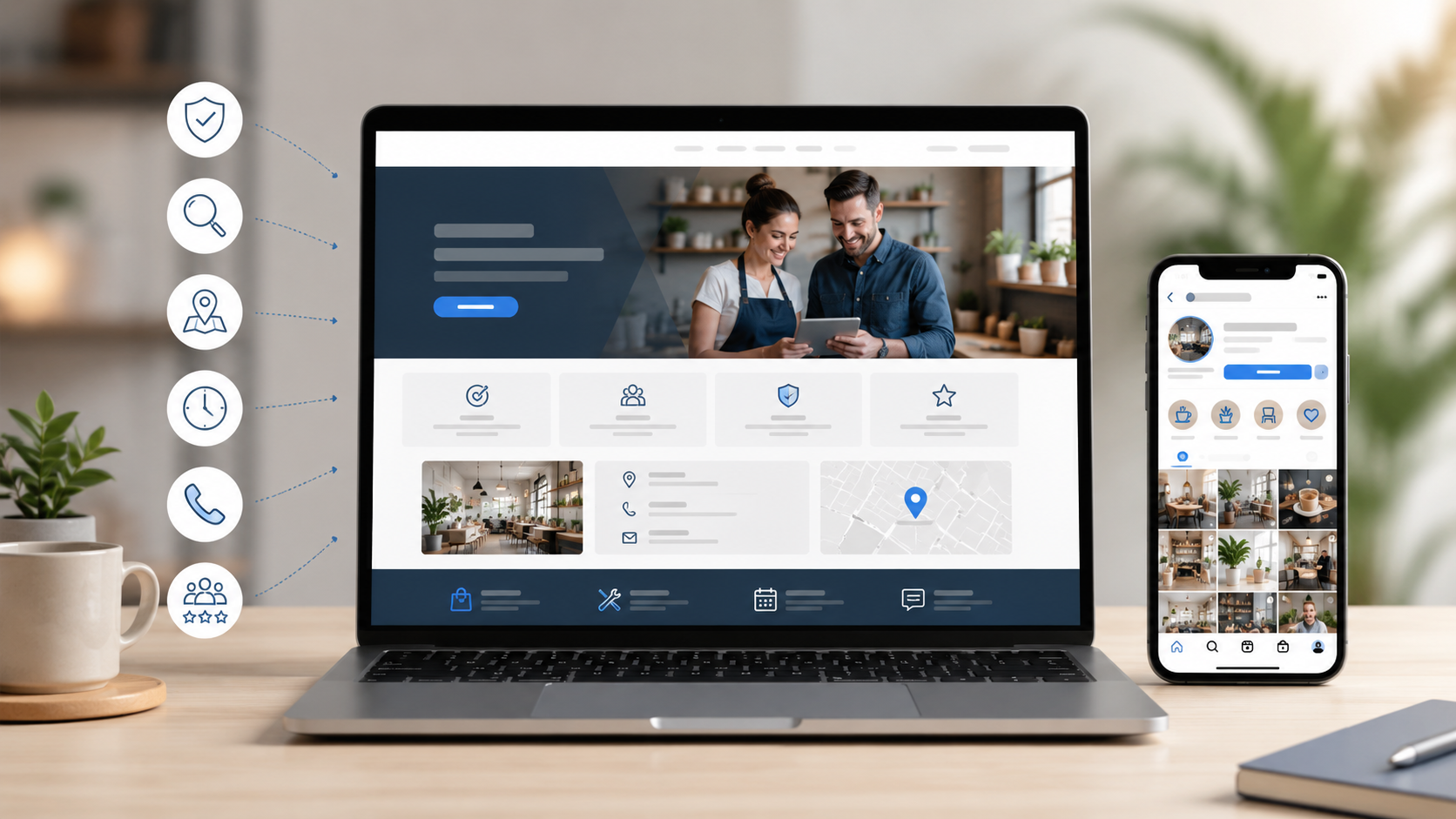
Getting a website built is not just a technical step for being visible online. For small businesses, personal brands, cafes, barber shops, educational institutions, or service-based businesses, a website can help build trust, present information clearly, and guide potential customers toward the right action.
That is why it is not enough to think only about making the site “look good.” Before starting a website project, it is important to clarify your goal, needs, content structure, and how you want to use the website in the future.
1. Clarify the purpose of the website
The first question you should ask is simple: What should this website do for me?
For some businesses, the main goal is to look more professional online. For others, the goal may be to collect potential customers through a contact form, guide visitors to book an appointment, or clearly present services and prices.
For example, a cafe website may need to highlight the menu, location, and opening hours. A barber shop website may need to focus more on services, pricing, and appointment actions. A personal brand or portfolio website may need to highlight skills, projects, and contact information.
Clarifying the purpose from the beginning directly affects the design, content, and page structure of the website.
2. Think about your target audience
A website should not only be designed for you. It should be designed for the people who will visit it.
Who will enter your website? Will your visitors want to get information quickly? Will they mostly visit from mobile devices? Will they compare your services, read about your business, or contact you directly?
The answers to these questions shape the tone, layout, and priorities of the website. For example, on a local business website, phone number, location, and WhatsApp links should be easy to find. On an educational institution website, programs, institutional information, and trust-building content may need to be more visible.
3. Decide the page structure in advance
Before starting a website project, it is useful to think about which pages are actually needed.
For many small businesses, the following pages may be enough:
- Home
- About
- Services
- Projects or References
- Blog
- Contact
However, every business has different needs. For some projects, a one-page landing page may be enough. For others, a blog, portfolio, or editable content structure may be necessary.
Deciding the page structure early helps make the project scope, pricing, and delivery timeline much clearer.
4. Understand domain and hosting basics
Two common terms you will hear during a website project are domain and hosting.
A domain is your website address. For example, “yourbusiness.com” is a domain name. Hosting is the server space where your website files are stored.
These terms may sound technical, but understanding the basics is useful. It is important that your website and its core access details belong to you. Having your domain and hosting registered under your own name helps you keep control of your website in the long term.
If you are not familiar with this process, you can ask the person building your website to guide you through domain and hosting decisions.
5. Pay attention to mobile compatibility
Today, many visitors open websites from their phones. That means your website should not only look good on a computer screen.
A mobile-friendly website should be readable on small screens, load quickly, have buttons that are easy to tap, and make contact information easy to access.
Mobile compatibility is especially important for local businesses. A potential customer may search for your location, phone number, working hours, or services while they are outside. If the site is hard to use on mobile, that visitor may leave quickly.
6. Ask whether you can update the website later
Another important question is how the website will be updated after it is delivered.
Some websites are fully custom-coded and require developer support for updates. Others are built with WordPress or an admin-based structure, allowing the website owner to update blog posts, project content, images, or certain text areas later.
If you plan to add content regularly, publish blog posts, update your projects, or change service information, an editable structure may be a better choice.
Before getting a website built, it is worth asking: Will I be able to update this website myself later?
7. Do not think about pricing only by page count
Website pricing is not based only on the number of pages. Design quality, content needs, mobile compatibility, admin panel requirements, WordPress setup, contact forms, blog systems, speed optimization, and SEO structure can all affect the cost.
That is why asking “How much is a five-page website?” is not always enough. A better question is: What does my business actually need to have a reliable, useful, and long-lasting website?
A well-prepared website is more than a digital business card. It can become the online front door of your business.
8. Review previous work and the working process
Before choosing someone to build your website, it is useful to review their previous work. This gives you an idea about design style, layout quality, mobile experience, and how information is presented.
It is also important to understand the working process. How will the project move forward? Are revisions included? Who prepares the content? Will there be support after delivery?
Clarifying these questions before the project starts helps both sides understand expectations more clearly.
Conclusion
Before getting a website built, you should clarify your goal, target audience, page structure, domain and hosting needs, mobile experience, and whether you need an editable structure.
A well-planned website can help your business or personal brand look more trustworthy online. A website should not only look good; it should also serve a clear purpose.
If you need a modern and clean website for your small business, personal brand, or local service, we can plan the right structure together based on your project needs.