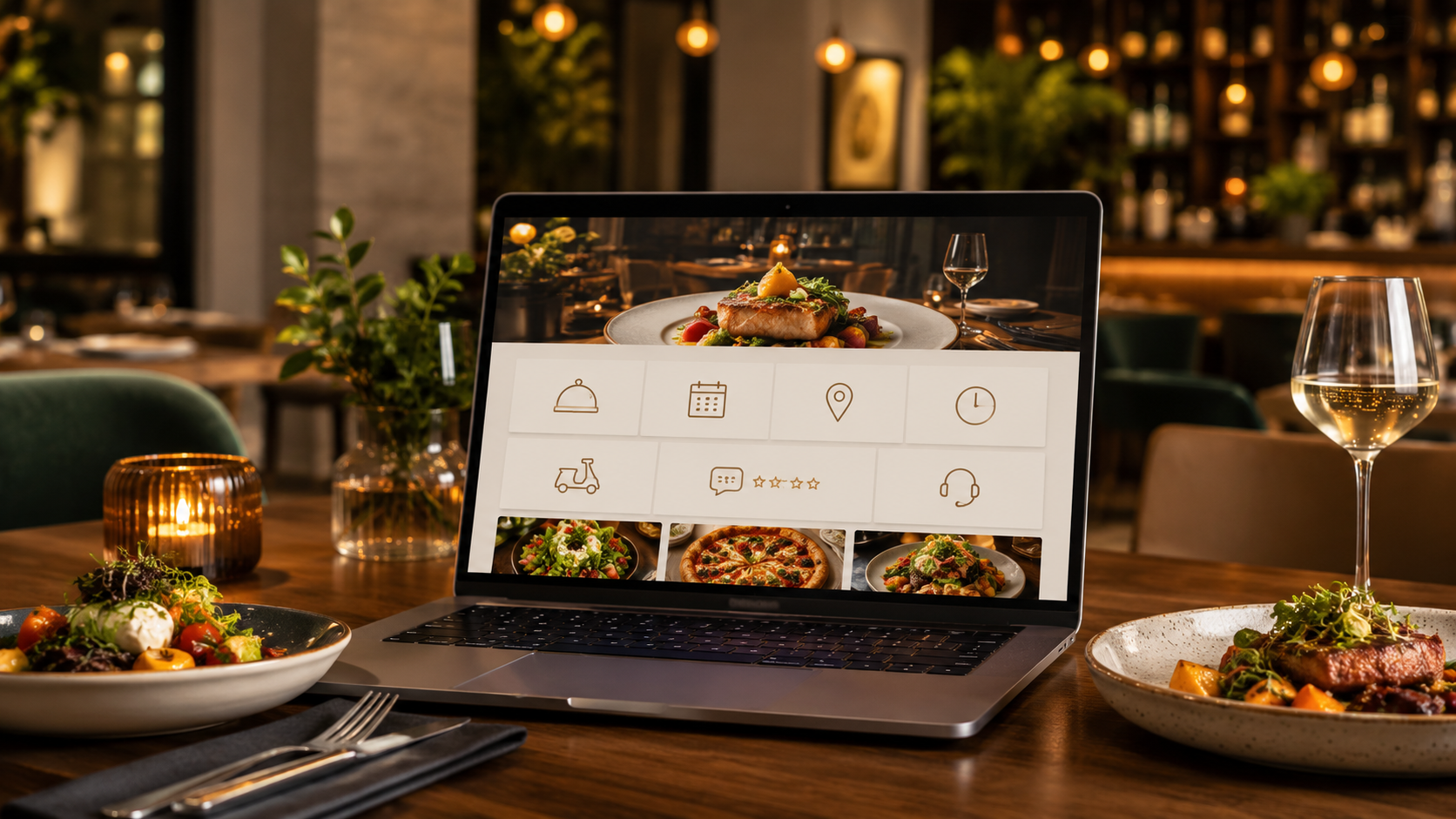
A restaurant website is not just a simple page created to be visible online. When planned correctly, it can become a strong digital storefront that helps customers understand the restaurant, explore the menu, find the location, and decide whether to make a reservation or place an order.
Today, many restaurants rely on Instagram, Google Maps, or food delivery platforms for visibility. These platforms are important, but a website still provides a major advantage by presenting all key information in a structured, trustworthy, and controlled way.
Menu, opening hours, location, reservation options, delivery information, and contact details are the main things customers want to find quickly. That is why a restaurant website should be simple, fast, and mobile-friendly.
1. The first impression should feel appetizing and trustworthy
When a visitor enters a restaurant website, they should quickly understand the style and experience of the restaurant.
The first section can include a high-quality food or interior photo, a short introduction, and a clear action. Buttons such as “View Menu,” “Make a Reservation,” “Get Directions,” or “Order Now” can guide visitors toward the next step.
This section should not feel crowded. A clean, warm, and trustworthy design helps strengthen the professional image of the restaurant.
2. The menu should be easy to explore
One of the most important sections of a restaurant website is the menu. Customers may want to see dishes, drinks, and the general price range before visiting or ordering.
The menu section should be clean, readable, and easy to use on mobile devices. Categories can be clearly separated, such as starters, main dishes, desserts, drinks, or special menus.
If the menu changes often, an editable structure can be a better choice. Outdated or incorrect menu information can damage customer trust.
3. Location and directions should be visible
For restaurants, location details are extremely important. If a customer wants to visit, they should quickly find the address and map link.
The website can include the full address, Google Maps link, and if needed, parking or transportation details. For mobile users, a “Get Directions” button is very useful.
If location information is hard to find, customers may lose time or choose another restaurant.
4. Opening hours should be clear
Opening hours are one of the most basic details customers look for on a restaurant website.
Weekday and weekend hours, special day changes, or kitchen closing time should be stated clearly. If the restaurant serves breakfast, lunch, or dinner during specific hours, this information should also be presented clearly.
Missing or outdated opening hours can create a negative customer experience.
5. Reservation or order actions should be easy
A restaurant website should not only provide information. It should guide visitors toward actions such as reservation, ordering, or contacting the business.
Phone number, WhatsApp link, online reservation form, or delivery platform links should be easy to find.
For mobile users, buttons such as “Call Now,” “Make a Reservation,” “Message on WhatsApp,” or “Order Now” can make the decision process faster.
6. Real photos build trust
Visuals play an important role when people choose a restaurant. Customers want to see the food, presentation, table setup, and atmosphere.
That is why real and high-quality photos should be included on the website. Food photos, interior images, table arrangements, kitchen details, or event areas can influence the visitor’s decision.
However, images should not slow down the website. A few high-quality and well-selected photos are usually more effective than many random images.
7. Customer reviews and social proof matter
When choosing a new restaurant, customers often care about other people’s experiences. Customer reviews, ratings, or short testimonials can help build trust on the website.
Reviews should feel natural and realistic. Google Maps, Instagram, or other social media links can also support the restaurant’s digital credibility.
Especially for local restaurants, social proof can make the customer’s decision easier.
8. Mobile compatibility is essential
Most people searching for a restaurant visit websites from their phones. That is why the website should be fast, readable, and easy to use on mobile devices.
The menu should be easy to explore, buttons should be easy to tap, location details should be quick to find, and contact options should be presented without confusion.
If the website loads slowly or looks messy on mobile, visitors may leave before visiting the restaurant or placing an order.
Conclusion
A well-prepared restaurant website should present the menu clearly, make location easy to find, show opening hours, simplify reservation or ordering actions, and build trust.
A website should not only look good. It should help customers make a decision more easily. With the right structure, a restaurant can strengthen its digital visibility and professional image.
Let’s plan a modern website for your restaurant
If you need a simple, fast, and mobile-friendly website for your restaurant, you can contact me.
Reach me through the contact page and let’s plan the right website structure for your restaurant.