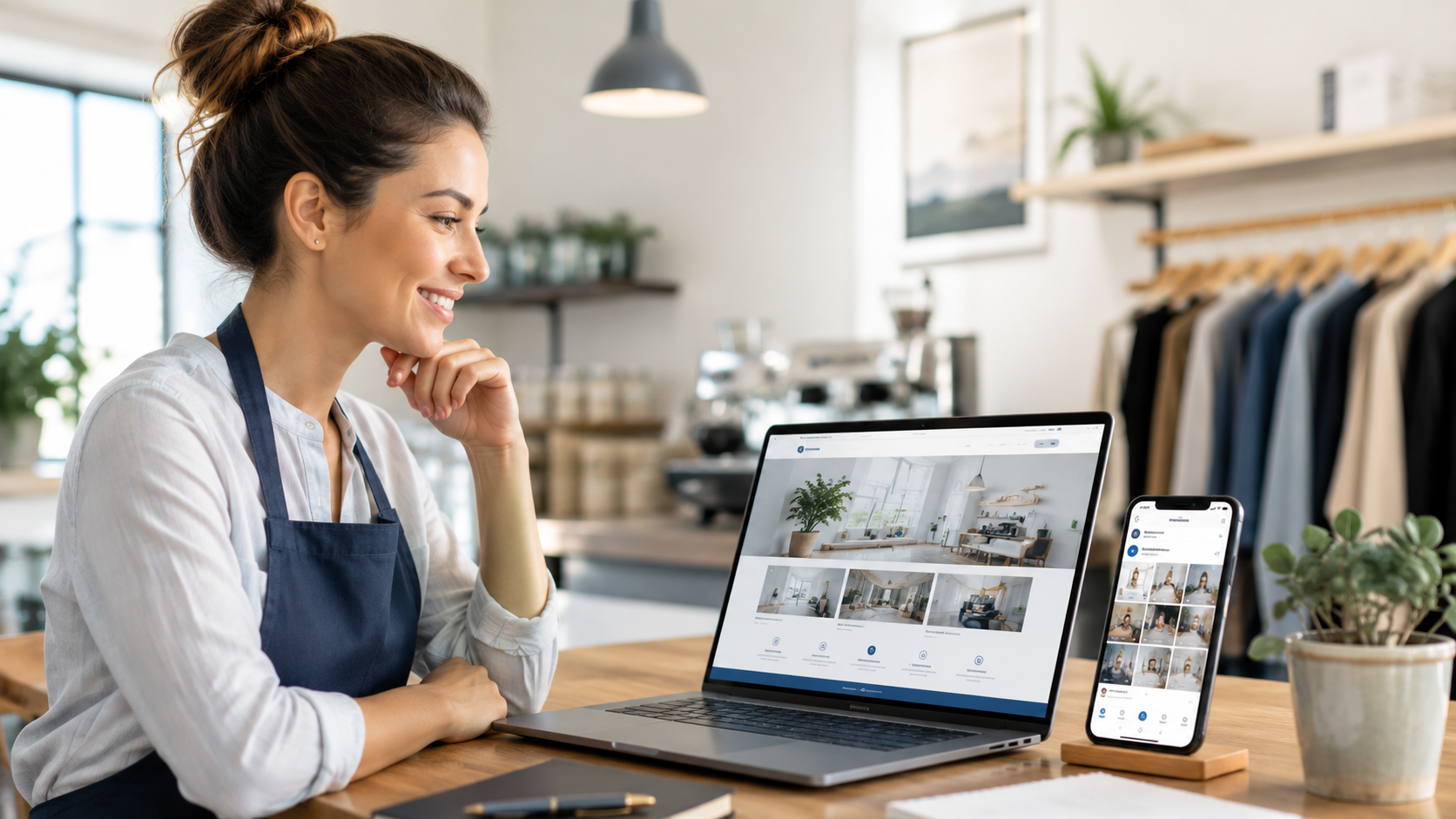
Recently, I designed a demo website concept for a library cafe in Ankara. The goal was not simply to create another cafe website, but to build a digital experience that reflected the atmosphere and identity of the business.
Many local businesses rely primarily on social media. While social media is useful, it often makes information difficult to find. Customers may need opening hours, location details, contact information, events, or menu highlights, and a website can present all of that in a more structured way.
This project was created as a demonstration of how a local business website can be designed around customer experience rather than just products and services.
The Challenge
A library cafe is different from a traditional cafe. People do not only visit for coffee. They come to study, read books, attend events, participate in speaking clubs, work on personal projects, or simply spend time in a quiet environment.
Because of that, the website needed to communicate more than a menu. It needed to show visitors what kind of experience they could expect before they even visited the venue.
The challenge was finding a balance between a warm cafe atmosphere and a professional, modern online presence.
My Design Approach
Instead of creating a complex multi-page website, I chose a clean one-page structure that allows visitors to quickly access the most important information.
The design was built around a simple customer journey:
- Discover the business
- Understand what makes it unique
- View the main features and facilities
- Read customer reviews
- Find location and contact information
- Take action
This approach helps reduce friction and allows visitors to find information without unnecessary clicks.
Key Features Included
The concept website includes several sections designed specifically for local businesses:
- Hero section with key information and business positioning
- About section explaining the concept of the venue
- Feature cards highlighting unique advantages
- Student-focused content area
- Menu showcase section
- Customer reviews and social proof
- Photo gallery placeholders
- Contact information and map section
- Clear call-to-action areas
Every section was designed with mobile users in mind because many local business visitors arrive through their phones.
Focusing on Experience Instead of Products
One of the most important decisions in this project was focusing on the overall experience rather than only the products being sold.
Many cafe websites concentrate almost entirely on food and drinks. While these elements are important, they are not always the primary reason people choose a specific venue.
For a library cafe, atmosphere is often the main selling point. Quiet study areas, community events, reading culture, and comfortable spaces can be more valuable than the menu itself.
The website was therefore designed to highlight the feeling of being there rather than simply listing products.
Lessons From The Project
This project reinforced an important principle of web design: every business has a unique story, and a website should help tell that story.
Using the same generic layout for every business often leads to websites that look similar and fail to communicate what makes a company different.
Even simple local business websites can become much more effective when they are built around the customer experience and the identity of the business.
Conclusion
This demo project demonstrates how a local business can use a website to communicate its atmosphere, build trust, and create a stronger online presence.
Rather than focusing solely on products or services, the website was designed to showcase the experience visitors can expect when they interact with the business.
Projects like this help illustrate how thoughtful design can support local businesses and create a more professional digital presence.