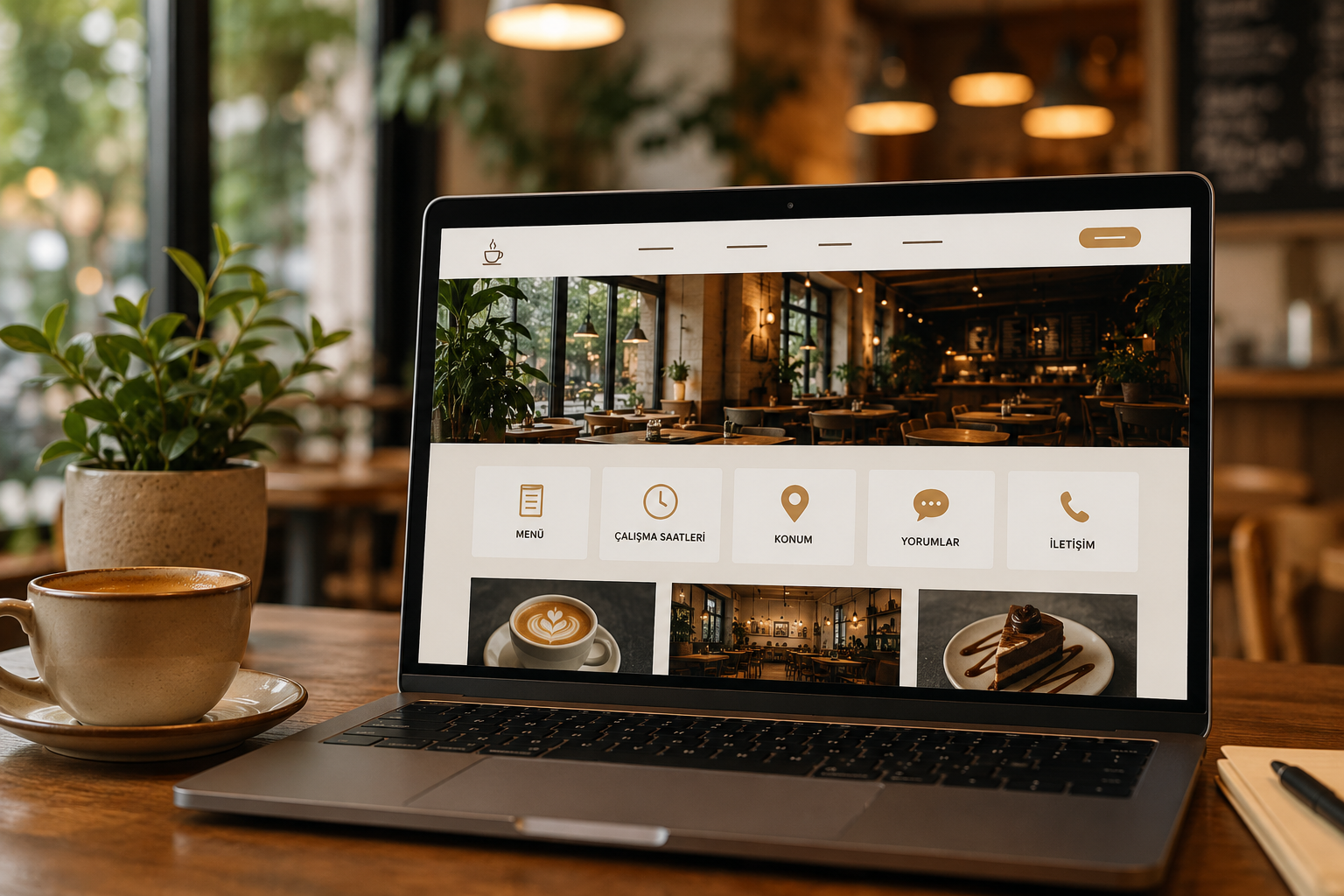
A cafe website is not created only to be visible online. When planned correctly, it helps customers understand the cafe, feel its atmosphere, explore the menu, and decide whether they want to visit.
Today, many cafes rely heavily on Instagram for visibility. This is useful, but customers often need more organized information. When location, opening hours, menu, photos, events, and contact details are presented clearly in one place, the cafe appears more professional and trustworthy.
That is why a cafe website should be simple, fast, mobile-friendly, and designed to guide visitors toward the right action.
1. A strong first impression section
When someone enters a cafe website, they should understand the business within a few seconds. This makes the first section of the homepage very important.
This area can include the cafe name, a short description, a strong visual, and a clear action. Buttons such as “View Menu,” “Get Directions,” or “Contact Us” can guide visitors quickly.
The first impression section should not feel crowded. A clean design with a high-quality visual that reflects the cafe atmosphere can build trust immediately.
2. A short introduction about the cafe
Every cafe has its own character. Some cafes focus on study and work areas, some focus on specialty coffee, and others position themselves as social meeting places.
A short “About” section helps visitors understand the cafe better. This section can explain the concept, target audience, and experience the cafe offers in a simple way.
The goal is not to write long corporate text. The goal is to communicate the feeling, atmosphere, and value of the cafe clearly.
3. Menu or featured products
One of the most searched pieces of information on a cafe website is the menu. Visitors may want to see coffee options, desserts, snacks, or the general price range.
That is why a menu section should be considered for every cafe website. The menu does not always have to be fully detailed. Sometimes, featured products, popular drinks, or simple categories may be enough.
The menu section should be clean, readable, and easy to view on mobile devices. If the menu changes often, an editable structure can be a better choice.
4. Photos and atmosphere section
Choosing a cafe is not only about products. People want to see the environment, seating areas, lighting, workspaces, and overall atmosphere.
That is why high-quality photos are important. Interior design, coffee presentations, study areas, bookshelves, outdoor space, or event areas can influence a visitor’s decision.
However, it is important not to slow down the website with too many unnecessary images. A few strong and high-quality photos are usually better than many random images.
5. Location, map, and opening hours
For local businesses, location is one of the most critical details. If a customer wants to visit the cafe, they should easily find the address, map link, and opening hours.
The website should clearly include the full address, Google Maps link, working days, and opening hours. For mobile users, a “Get Directions” button can be especially useful.
If this information is missing or hard to find, the customer may choose another business. That is why location and opening hours should be easy to access.
6. Customer reviews and trust elements
Before visiting a new cafe, customers may want to see what others think about it. Customer reviews, ratings, or short testimonials can help build trust on the website.
Reviews should not feel exaggerated or artificial. Real, simple, and natural comments usually feel more trustworthy.
Social media links, event photos, and highlights of the cafe’s unique features can also support trust and credibility.
7. Contact and action buttons
A cafe website should not only provide information. It should also guide visitors toward the next step.
This step may be getting directions, calling the cafe, sending a WhatsApp message, or visiting the Instagram profile.
That is why contact details should be clear and easy to access. Phone number, WhatsApp, email, social media links, and a contact form can all help visitors take action without confusion.
Conclusion
A well-prepared cafe website should be fast, mobile-friendly, simple, and trustworthy. Visitors should quickly understand the cafe, view the menu, feel the atmosphere, find the location, and contact the business easily.
A website works like the digital storefront of a cafe. It should not be created only to look good. It should help customers make a decision more easily.
Let’s plan a clean and professional website for your cafe
If you need a modern, mobile-friendly, and trustworthy website for your cafe, you can contact me.
Reach me through the contact page and let’s plan the right website structure for your cafe.